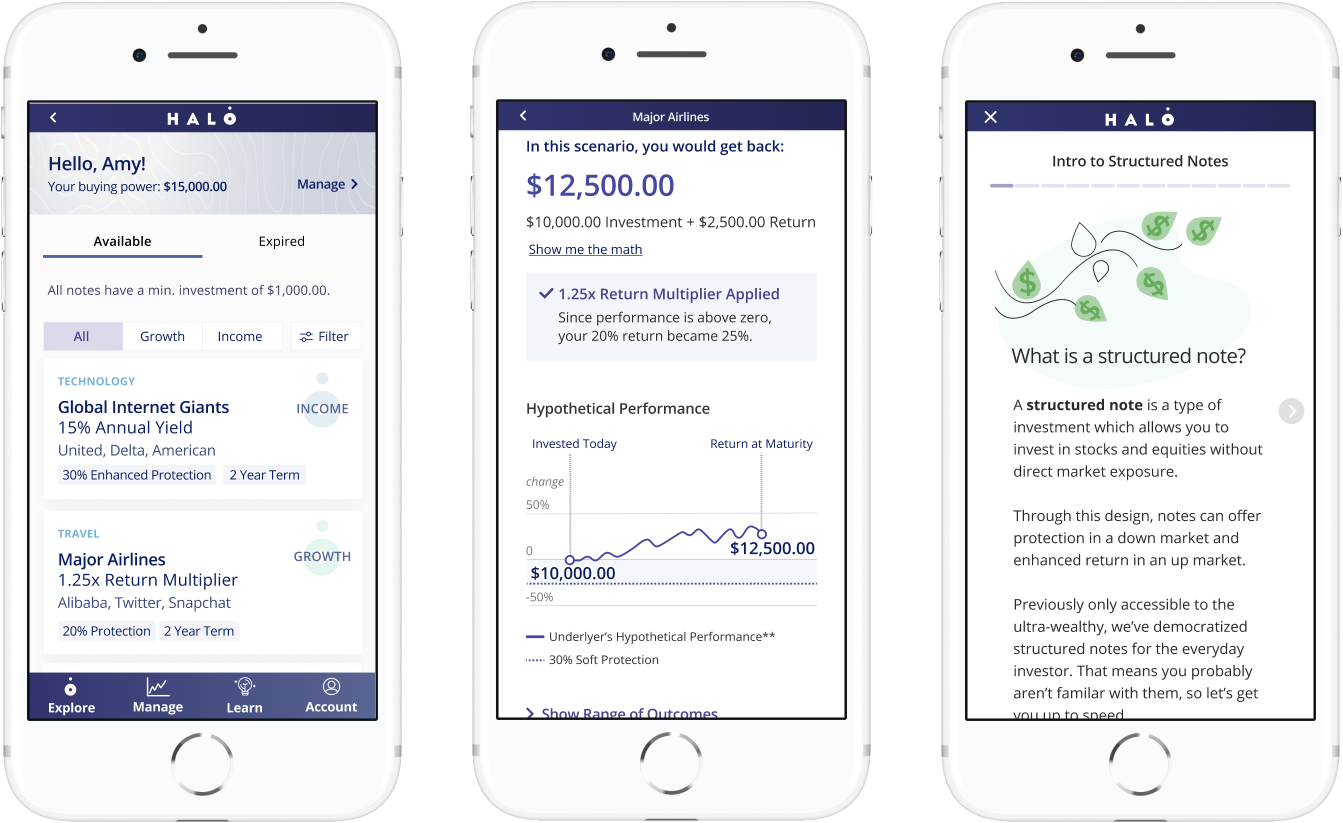

Making complex investments feel approachable
A structured note is an investment that lets you invest in stocks and equities without direct market exposure. Generally complex, structured notes have been used exclusively by wealthy investors. The vast majority of everyday investors are unfamiliar with them.
Key Design Questions
- How might we design the app in a way that makes notes feel approachable?
- How do we educate users while maintaining their attention?
- How do we build trust in a new investment vehicle?
From vision to validated product
I followed a rigorous process to ensure we built something users actually wanted:
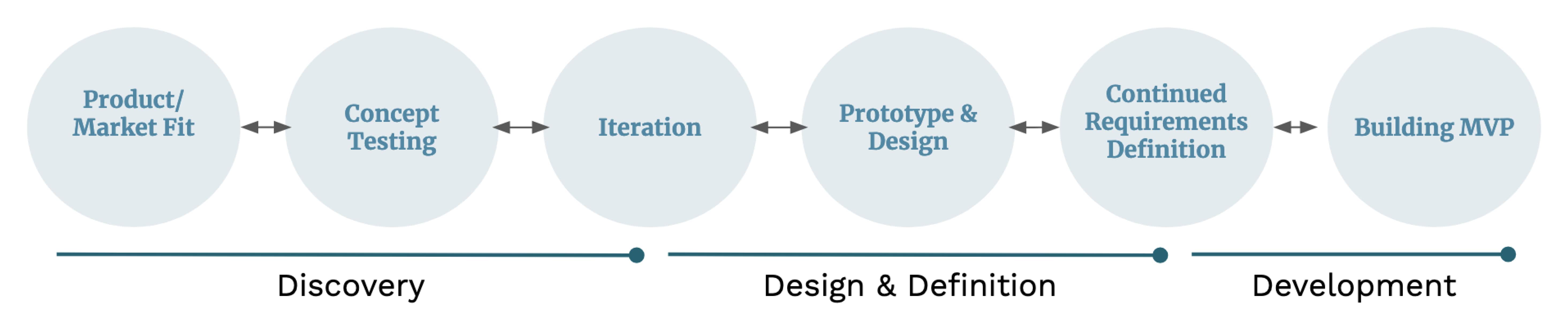
End-to-end design process
Process Steps
- Started with high-level business needs and proposed a vision
- Discovery phase focused on concept validation, market fit, and design iteration
- Created Figma prototypes to communicate vision to users, stakeholders, and developers
- Detailed designs and engineering partnership to bring it to life
Extensive research to find product-market fit
Concept exploration
I worked closely with my product manager (the structured note SME) to create early design concepts. What problems could this investment solve for people? How do people prioritize those problems? I used these questions to explore different ways to visualize the UI.
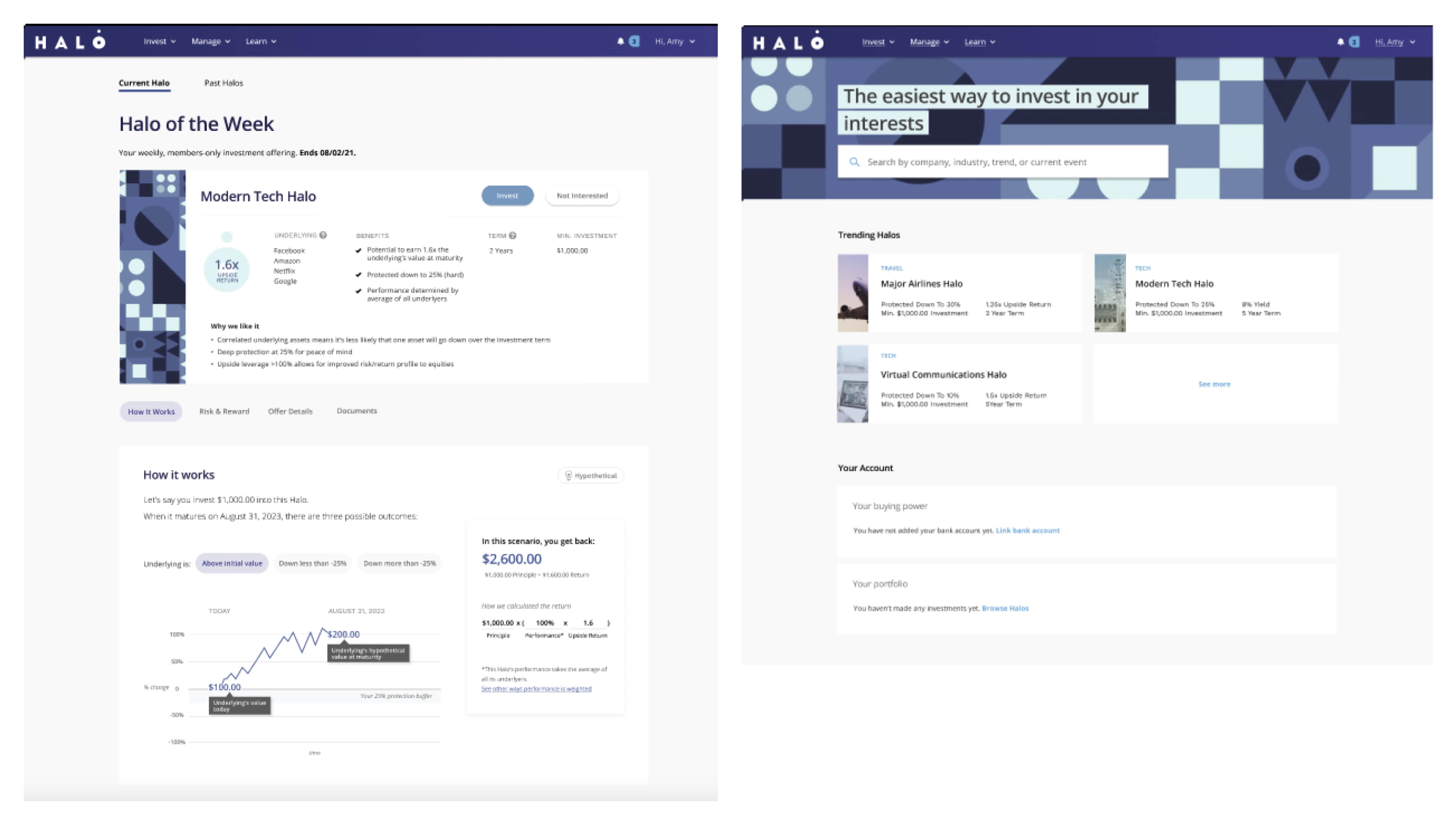
Early concept explorations for the app
Research at scale
Once we had ideas down, we began an in-depth process of user testing and rapid prototyping. Our goal was to find a clear product vision and product/market fit we were confident in.
Research Scope
- 43 interviews with participants sourced via userinterviews.com
- 1,000+ people surveyed across 5 separate Maze studies
- 6 months of discovery (June - December 2021)
- Countless design iterations based on feedback
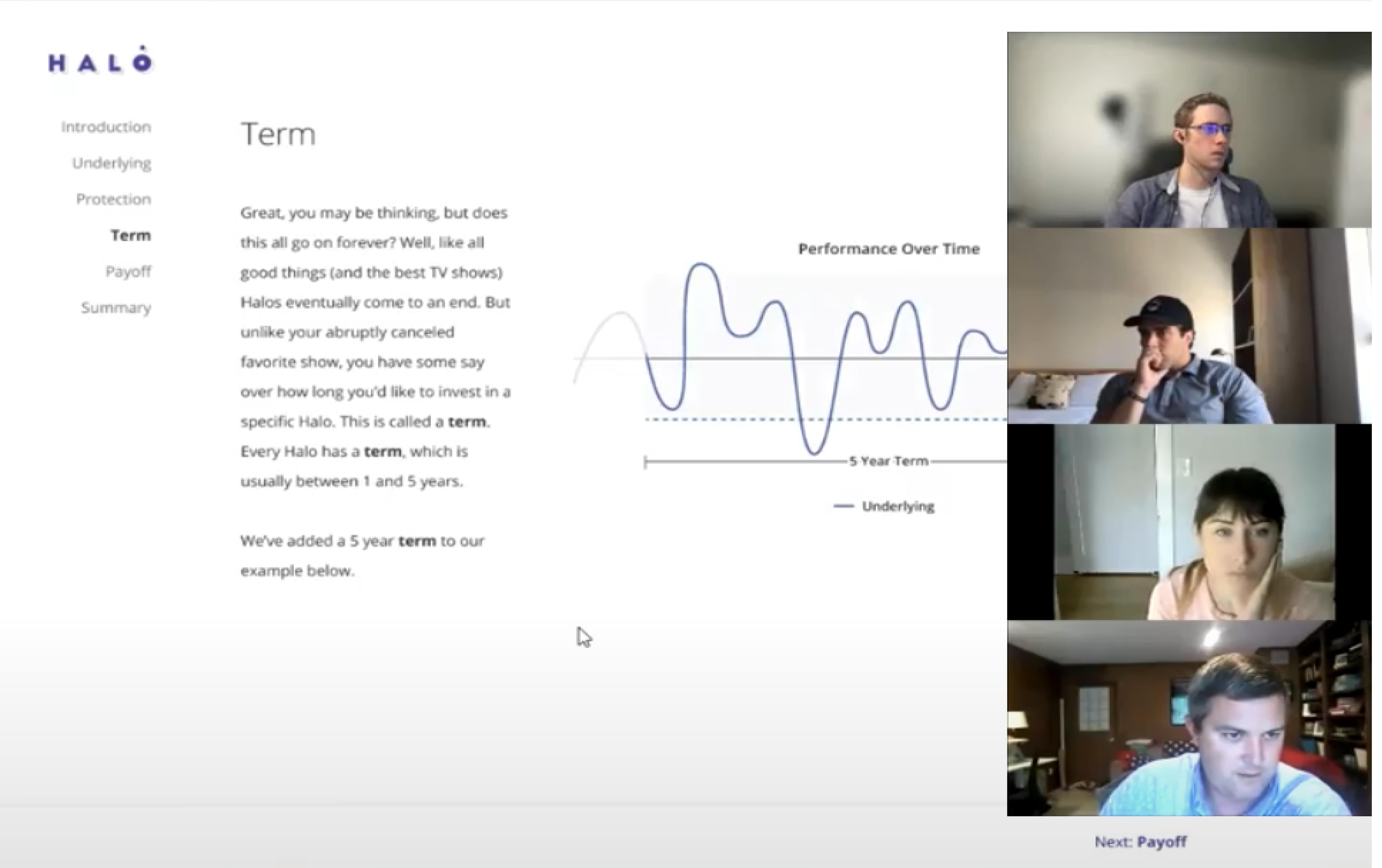
One of 43 user interviews conducted during discovery
Test, iterate, repeat
I put a lot of care into how we presented complex concepts, studying what participants had trouble grasping and what we could simplify. My goal was to make the design "invisible" and get participants talking about structured notes. After a few rounds of testing, this started to happen.
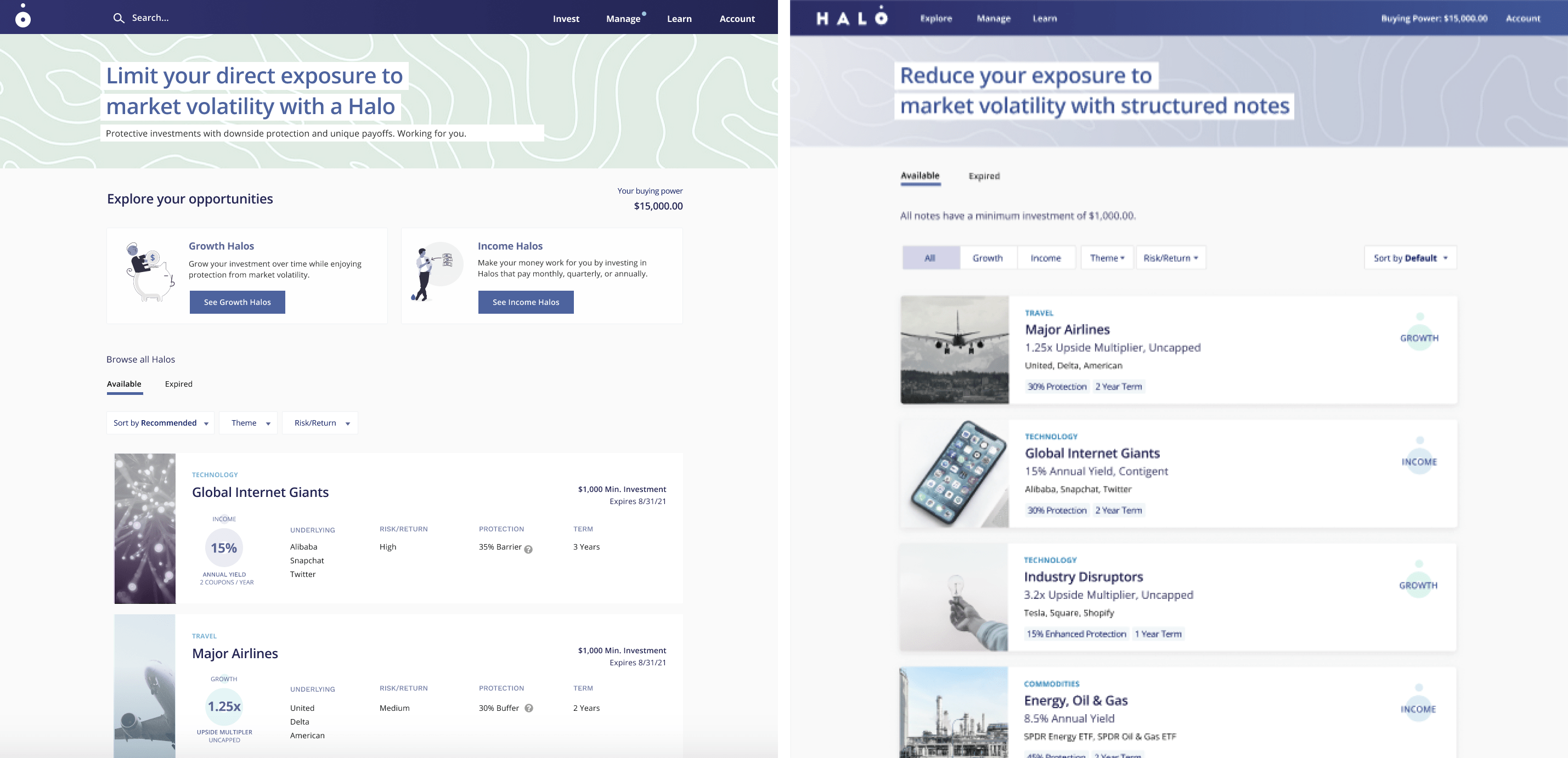
Evolution of the note presentation through testing
Key Research Findings
- Themed baskets (e.g., FANG companies, environmental companies) made notes feel more accessible
- Learning module was essential—we tested different lengths and presentation formats
- Users preferred interactive examples over passive explanations
- Limit data on screen—focus on narrative and key information
Data-driven personas
We filled in our proto-personas with data-driven details from testing. While we didn't have real users yet, this represented the demographic we would eventually serve.
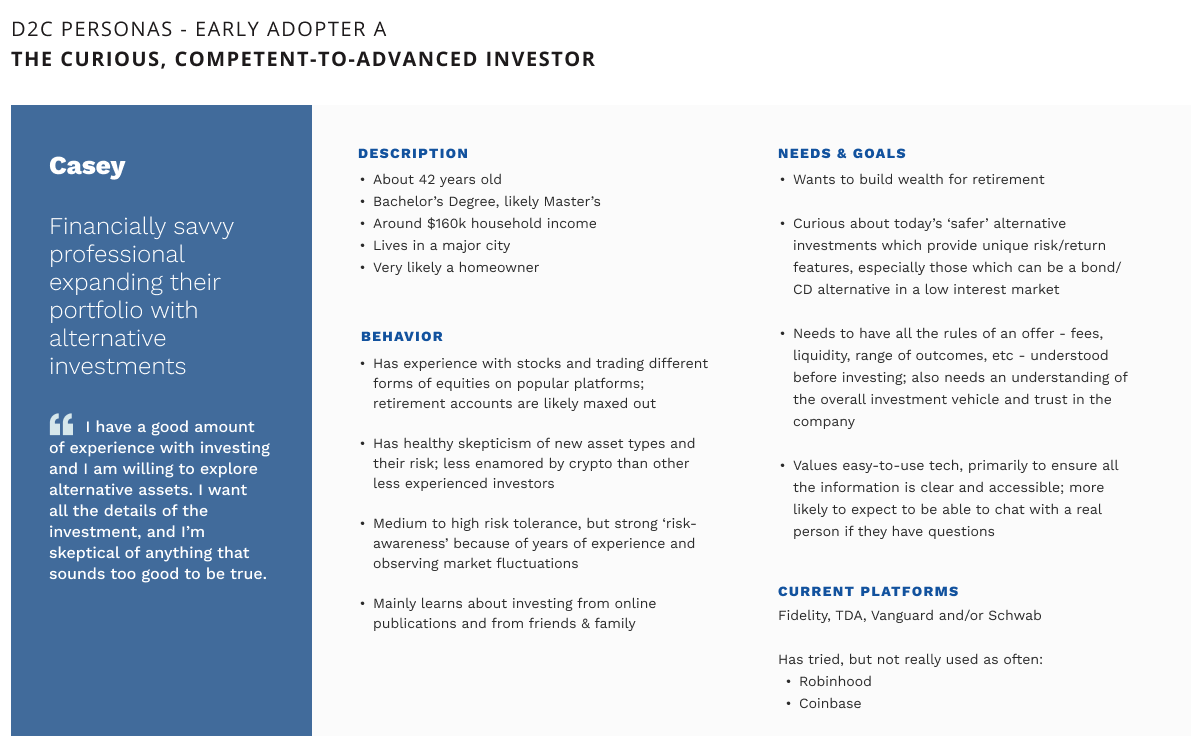
Competent investor
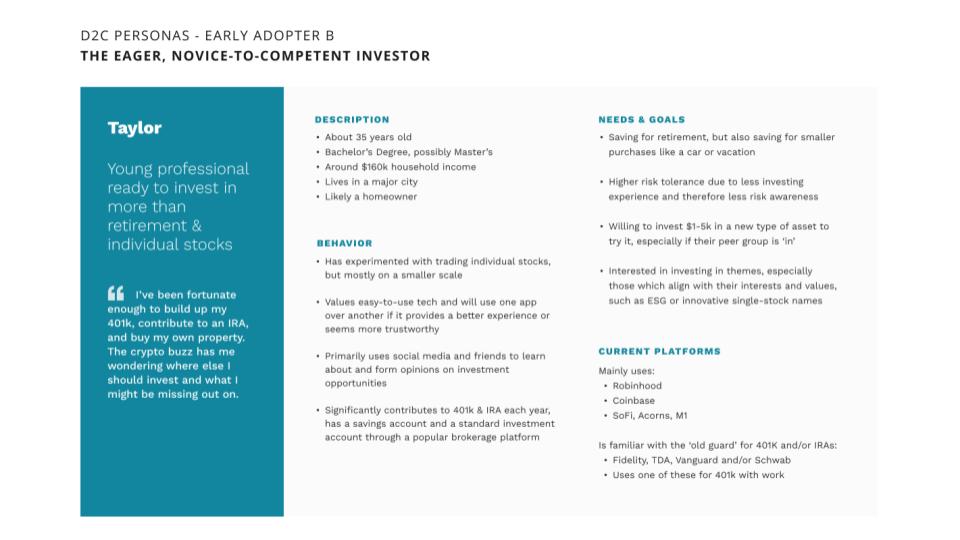
Eager novice
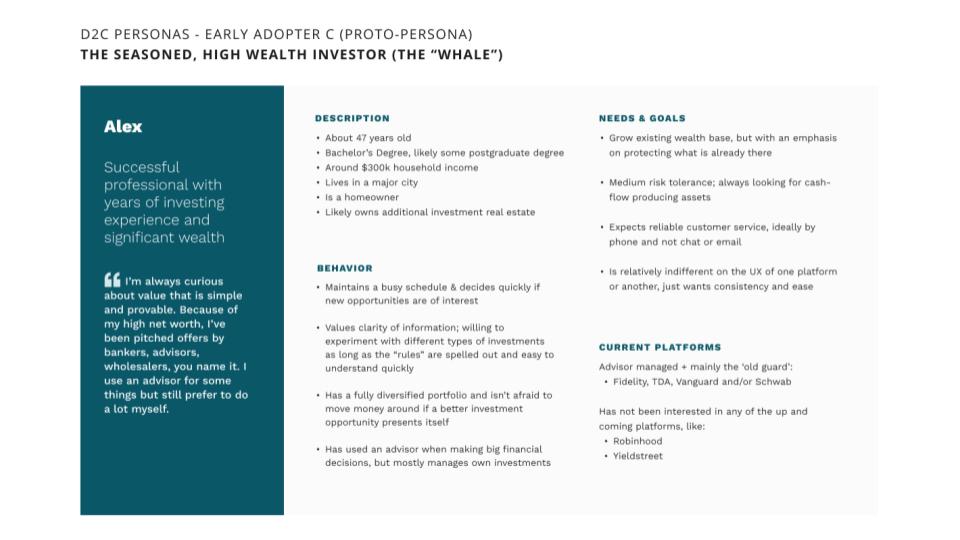
High-wealth investor
Persona Insights
- Gender had no significant bearing on wants or behaviors
- Users likely to invest $1-5k to start (self-reported)
- Risk tolerance had minimal impact—$1k seen as small enough to try
- High interest in alternative investments across the board
Building confidence through learning
Through testing and researching structured notes, I realized that a clear interface alone wouldn't be enough. People were being asked to invest in something they'd never heard of before—that required more than good UI.
I designed and wrote a comprehensive learning module, working closely with our structured notes SME to ensure accuracy. The module explains complex concepts through progressive disclosure, real examples, and comprehension checks that build investor confidence before they commit real money.
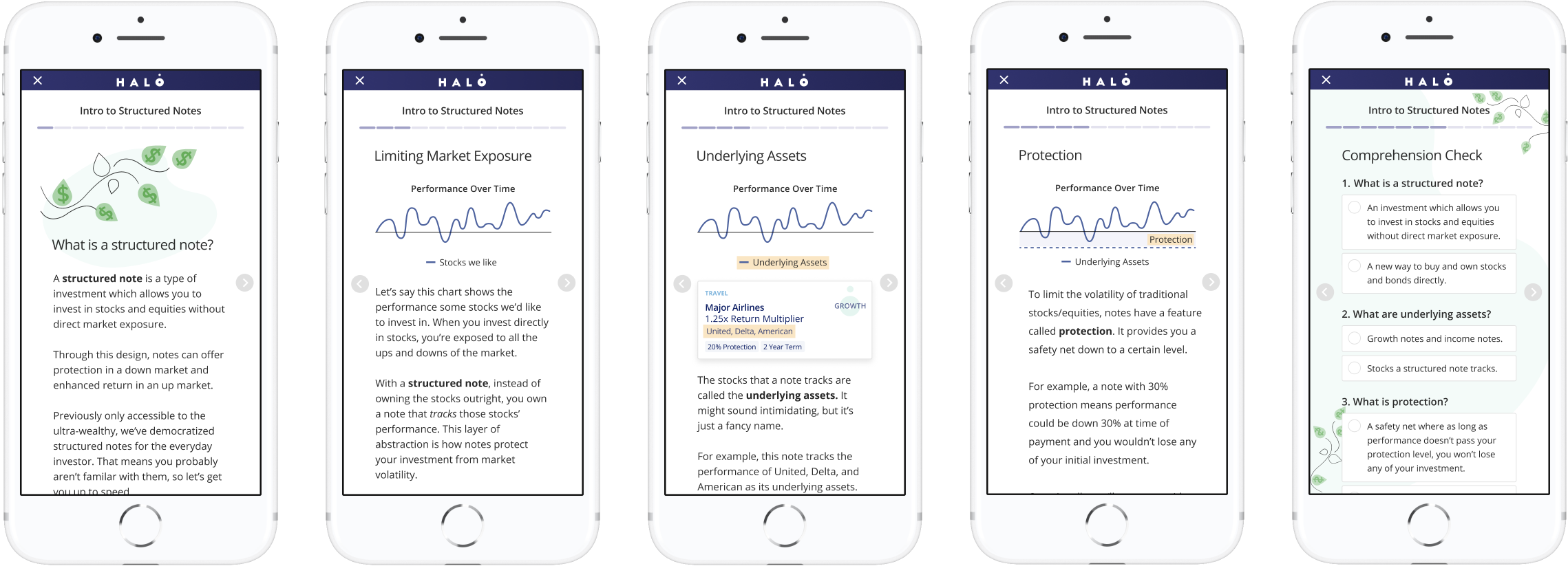
Interactive learning module walking users through structured note fundamentals
Learning Module Approach
- Progressive complexity: Start with "what is a structured note?" and build to protection levels and return multipliers
- Visual examples: Custom illustrations showing how notes track underlying assets
- Comprehension checks: Quiz questions ensuring users understand before investing
- Real product tie-ins: Examples use actual note types available in the app
Responsive web app for retail investors
After validating our direction, we worked with a team of six engineers to bring the vision to life. The final product balances education with ease of use, making structured notes accessible to everyday investors.
Interactive prototypes:
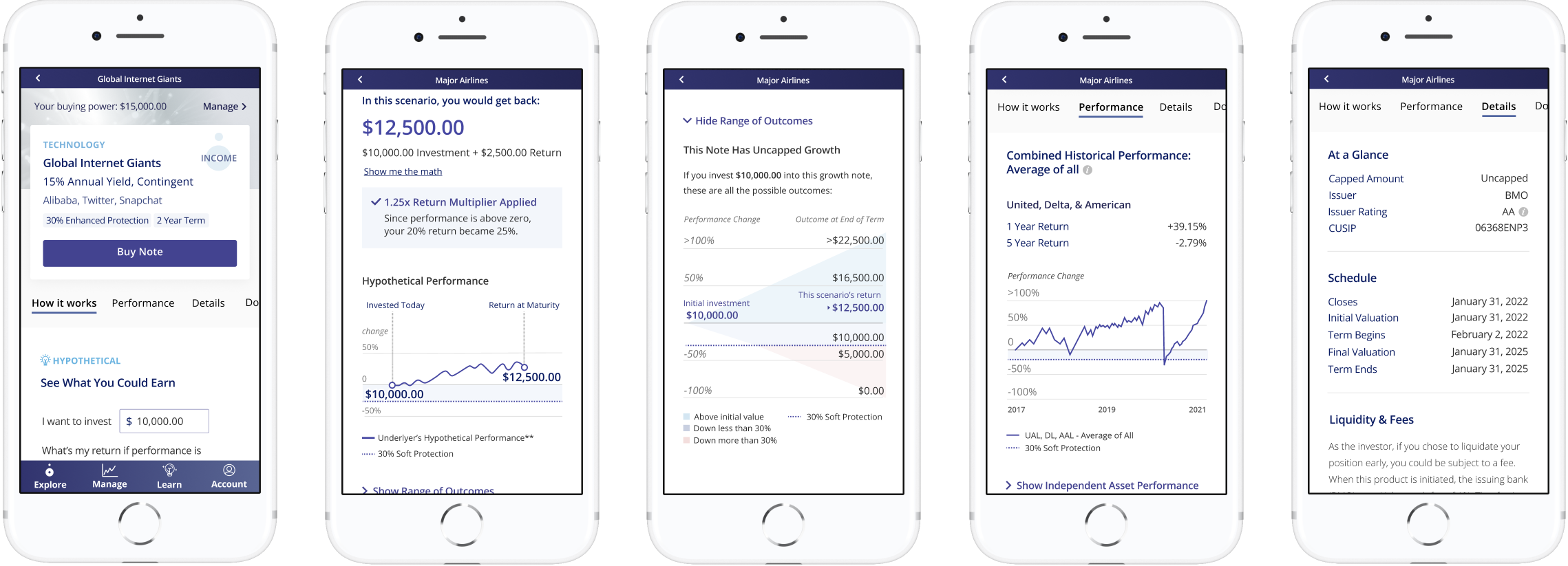
Growth note exploration flow with interactive performance scenarios
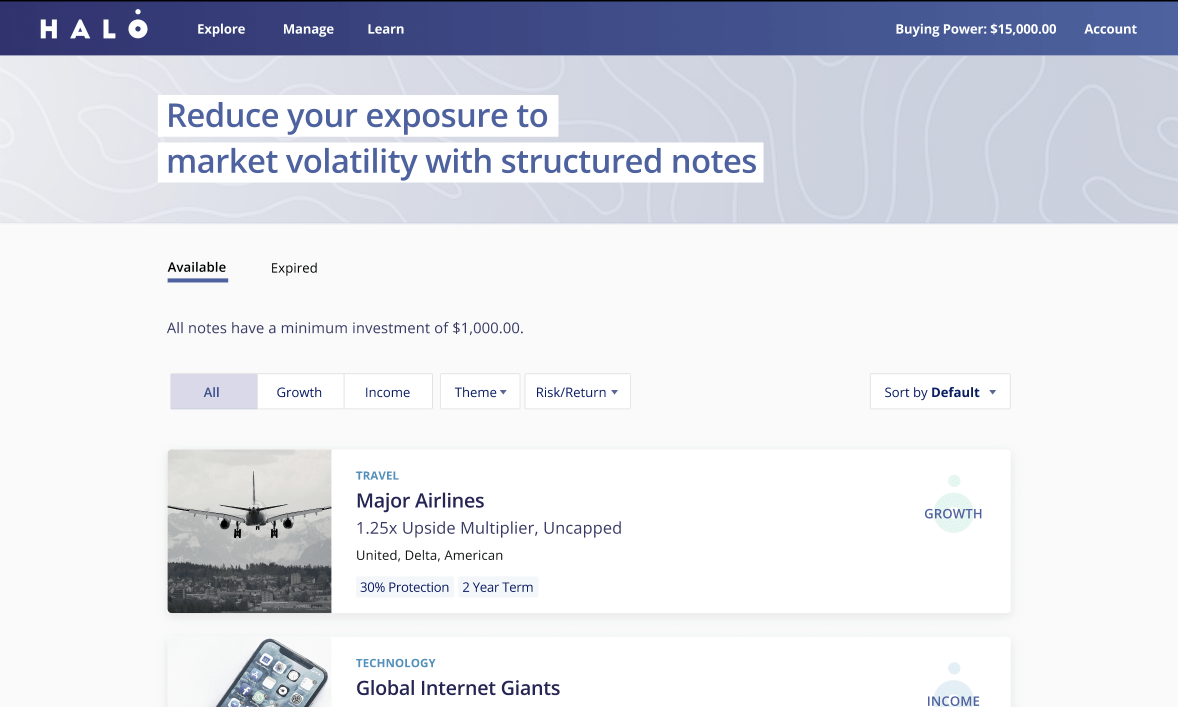
Full desktop dashboard experience
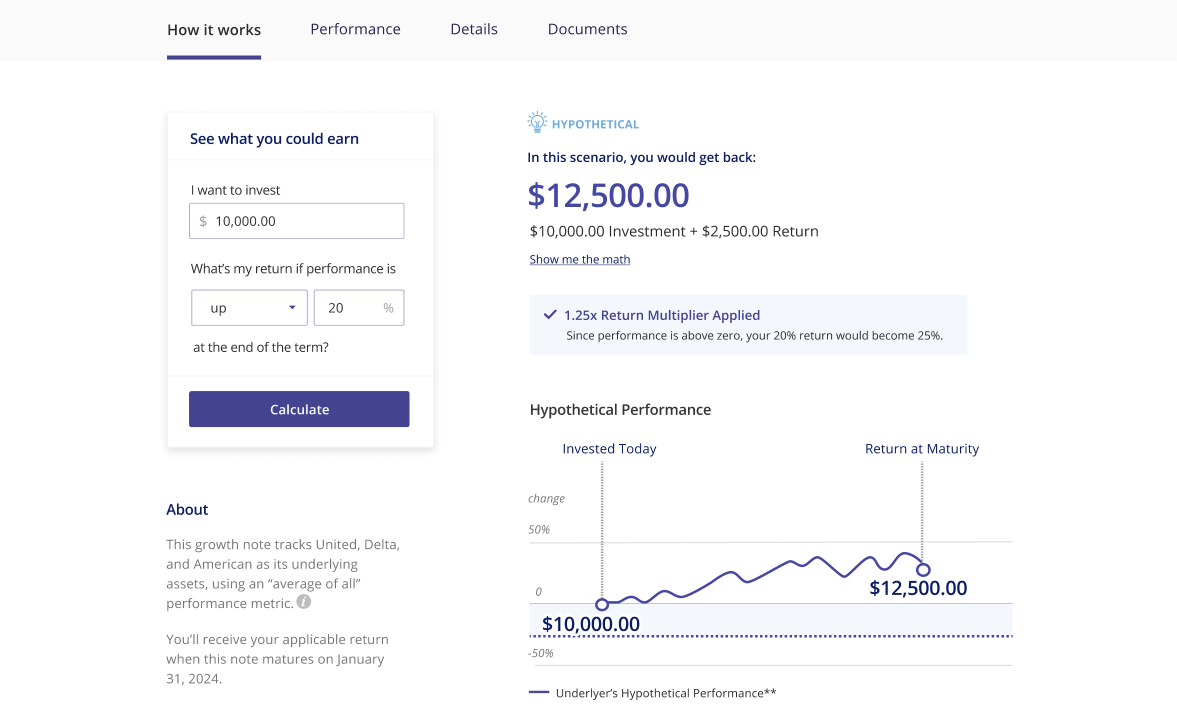
Investment portfolio overview
What I learned
This project taught me the value of extensive upfront research. Spending six months in discovery felt slow at the time, but it gave us confidence that we were building something users actually wanted—and saved us from costly pivots during development.
I also learned how to make the complex feel simple. The key wasn't dumbing things down, but finding the right metaphors, progressive disclosure, and interactive explanations that built understanding gradually.