
Reframing the problem to unlock value
Users needed guidance, not another health score
I joined this project mid-discovery and the team was planning to create a "cardiometabolic health score", a single number representing overall health like a credit score. I identified the following problems with this approach:
Problems with the Score Approach
- Potentially harmful: A numeric score could feel judgmental and alienate users already managing chronic conditions
- No clear value: A score without actionable recommendations doesn't help users improve
- Technical complexity: Required building a complex algorithm and gathering extensive user data before delivering any user value
- Regulatory risk: A proprietary score would need heavy regulatory involvement
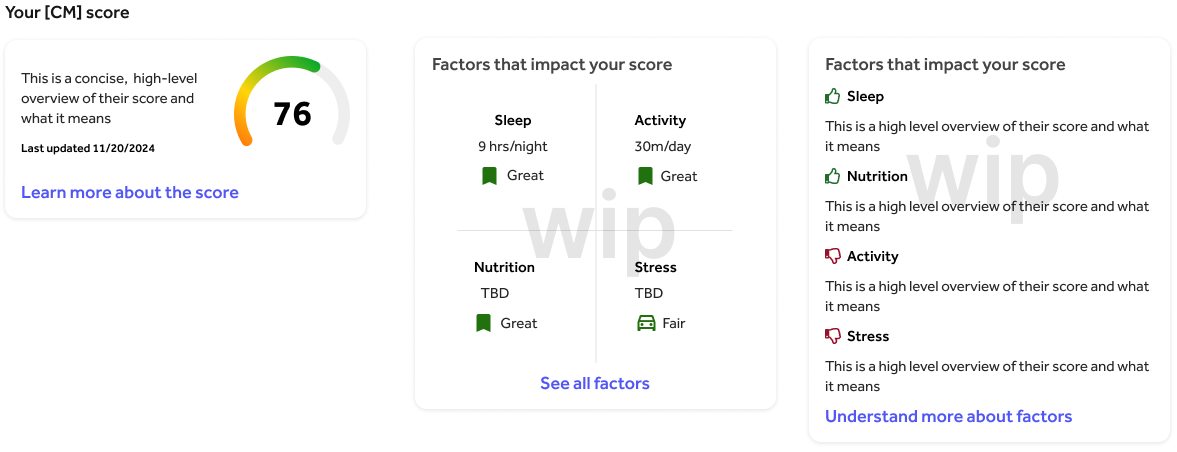
The original scoring concept I inherited when joining the project
Asking a different question
I reframed the core question from "How do we score health?" to "How do we guide health improvement right now?"
To build alignment, I wrote out my logic and created alternative design concepts showing the different approaches side-by-side. I flagged the implementation timeline risk—how the scoring approach would require building a complex algorithm before delivering any user value—versus delivering actionable guidance immediately with existing data. Through 1:1s with the Product Manager and collaborative sessions with Engineering and Clinical stakeholders, I systematically shifted the team toward actionable insights over abstract scoring.
"Let's give users something valuable today with the data we have, rather than waiting for perfect data to calculate a score they may not even want."
Understanding cardiometabolic health
Cardiometabolic health is measured by the American Heart Association using "Life's Essential 8": sleep, diet, physical activity, nicotine exposure, blood pressure, blood sugar, cholesterol, and weight. These pillars are interconnected—improving one often leads to improvements in others.
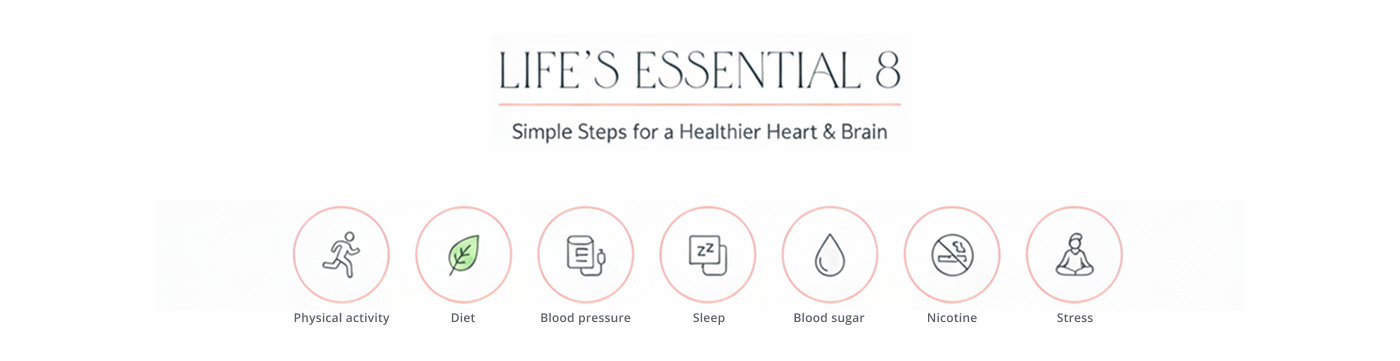
Source: American Heart Association, styled with Gemini
Our users are managing diabetes, hypertension, and/or obesity, meaning they likely have poor cardiometabolic health. By promoting ways to improve across these pillars, we increase the odds of positive health outcomes.
A Hidden Opportunity
Users new to Teladoc often struggle to find relevant care options within the app. This feature could serve as a personalized guide—connecting users to services that actually matter to them based on their health data, working around our historic information architecture challenges.
From concept to validated solution
Exploration & iteration
I started with rapid iteration on mockups for team feedback. The designs evolved from a simple promotional carousel to a sophisticated recommendations engine that surfaces solutions based on user data.
User testing
I partnered with our UX researcher to run unmoderated testing with 8 participants managing chronic conditions. We tested two key questions: Would users understand "cardiometabolic health"? Did they prefer guided flows or self-directed exploration?
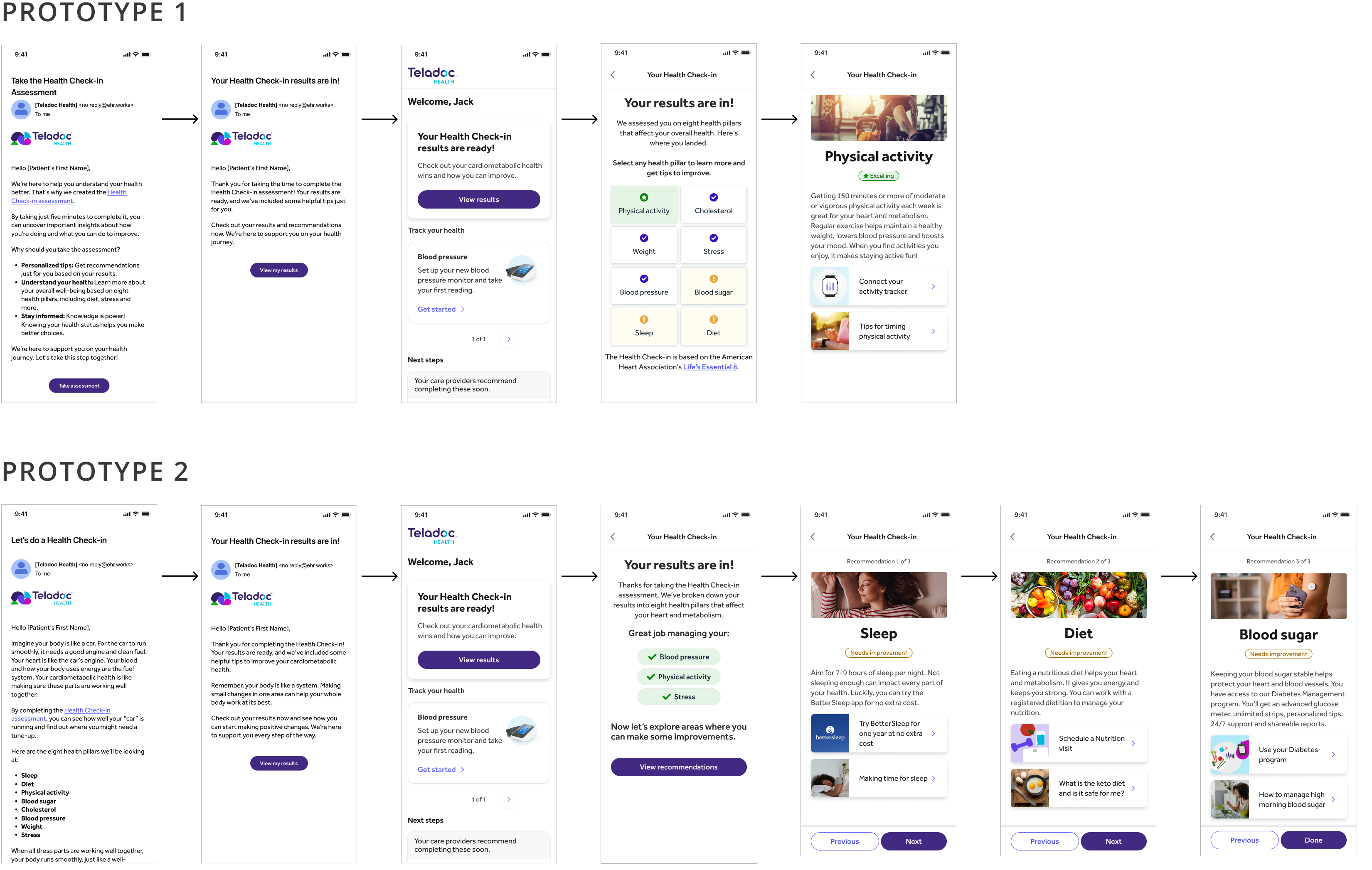
Prototypes tested: guided flow (top) vs. self-directed exploration (bottom)
Key Research Findings
- 7 of 8 participants preferred having control over the interface instead of a guided flow
- While unfamiliar with "cardiometabolic," users understood the meaning from context
- Participants weren't asking for a score—they wanted to see their data and get deeper insights
Custom illustrations
Once we had final design direction, we began engaging the creative team in tandem to working on the UIs and content for each health pillar. I partnered with them to develop custom illustrations that brought warmth and approachability to what could otherwise feel clinical.

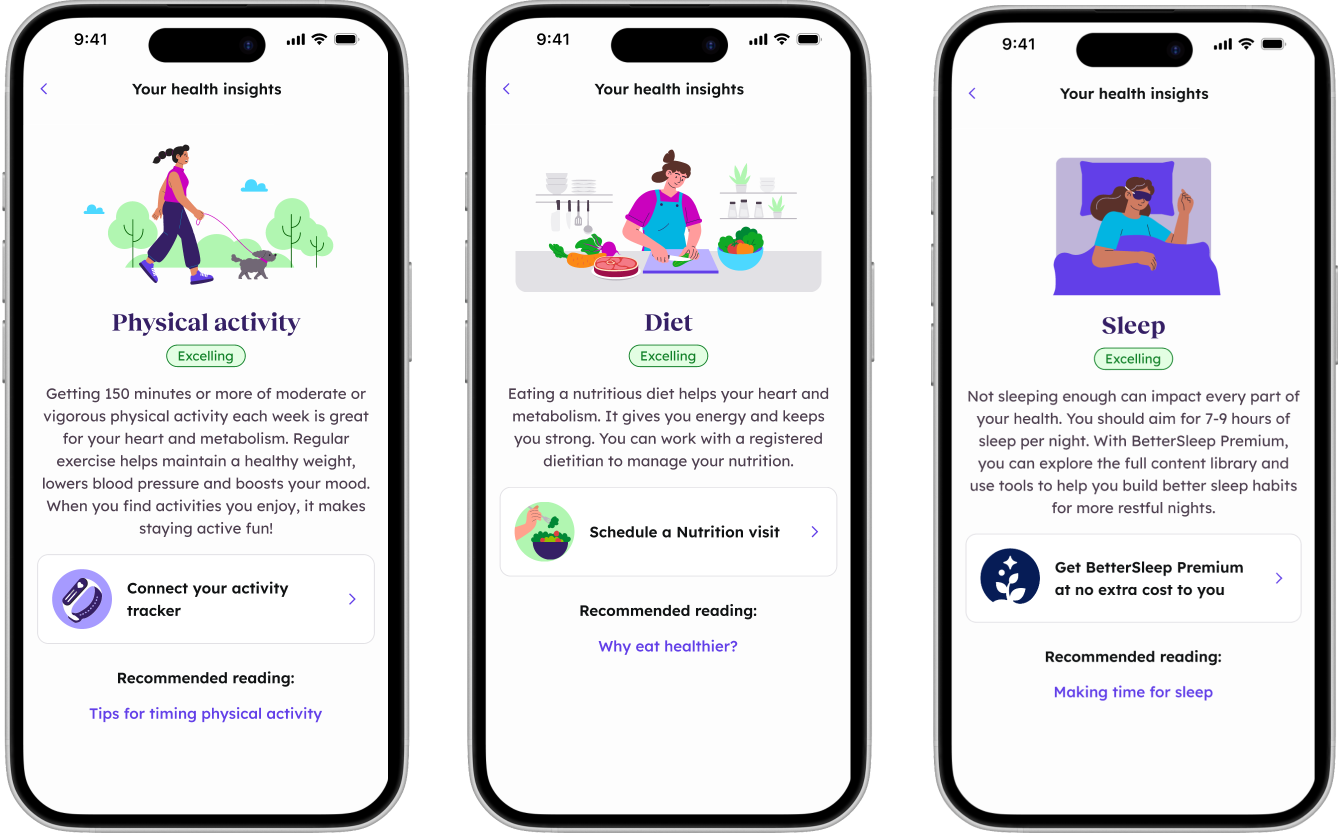
Custom illustrations developed for each health pillar
The shipped MVP
The final designs leverage available user data (device data, health surveys) to personalize recommendations without hiding any solutions from users. The experience celebrates areas where users excel while listing other health pillars in order of attention needed—connecting users to relevant Teladoc services based on their actual health needs.
Landing experience
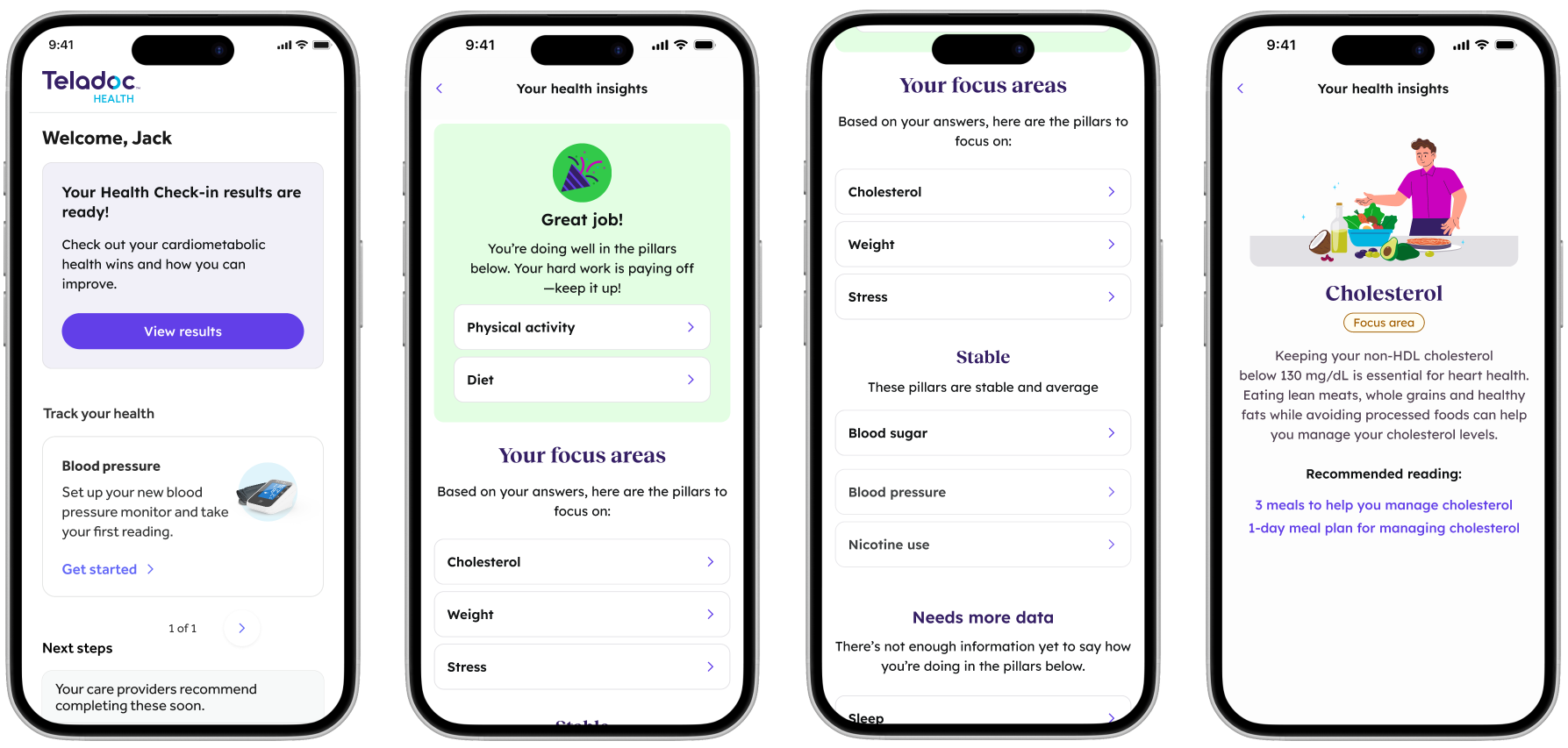
Entry point and landing experience for cardiometabolic health
Health pillar recommendations
Each of the 9 health pillars has a dedicated recommendation screen with personalized guidance based on user data.
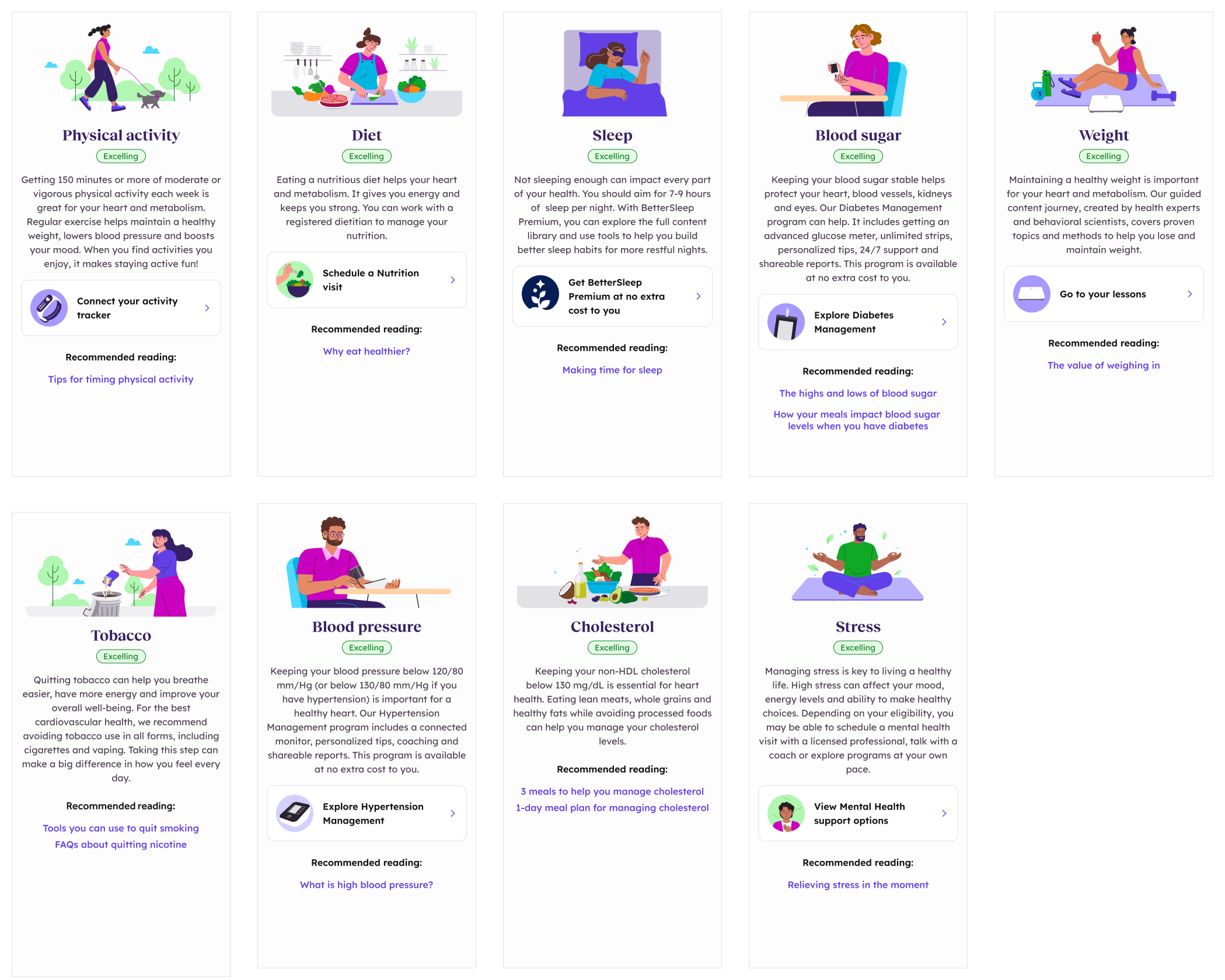
Recommendation screens for all 9 health pillars
Exceeding expectations
The company initially expected a visually small UI feature with a $1.7M sales target. The pivot from scoring to actionable guidance—delivered efficiently with existing data—paid off significantly:
Results
- $4M in revenue and $40.8M in sales pipeline (24x the $1.7M target)
- 45+ clients launching January 1, 2026
- Feature became the foundation for the company's highest priority initiative for 2026
What I learned
If I had joined earlier in discovery, I would have pushed for user research before the scoring concept gained momentum. By the time I joined, stakeholders were already attached to the idea, making the pivot harder than necessary.
I learned that presenting design concepts alongside clear risks and tradeoffs is a powerful way to get stakeholders aligned. Rather than just advocating verbally for an alternative approach, showing the options visually helped everyone reach the right conclusion together.
What's next
For MVP, recommendations exist as a point-in-time report. For the long term, we're exploring dynamic guidance: How might we surface help when users struggle day-to-day? How can we connect health pillars throughout the product? These questions will drive the 2026 roadmap.